Why we knew something had to change
Most employers would like to think they’re doing the right thing when it comes to preventing sexual harassment at work. They have policies in place, expectations around behaviour and procedures for dealing with complaints if they arise.
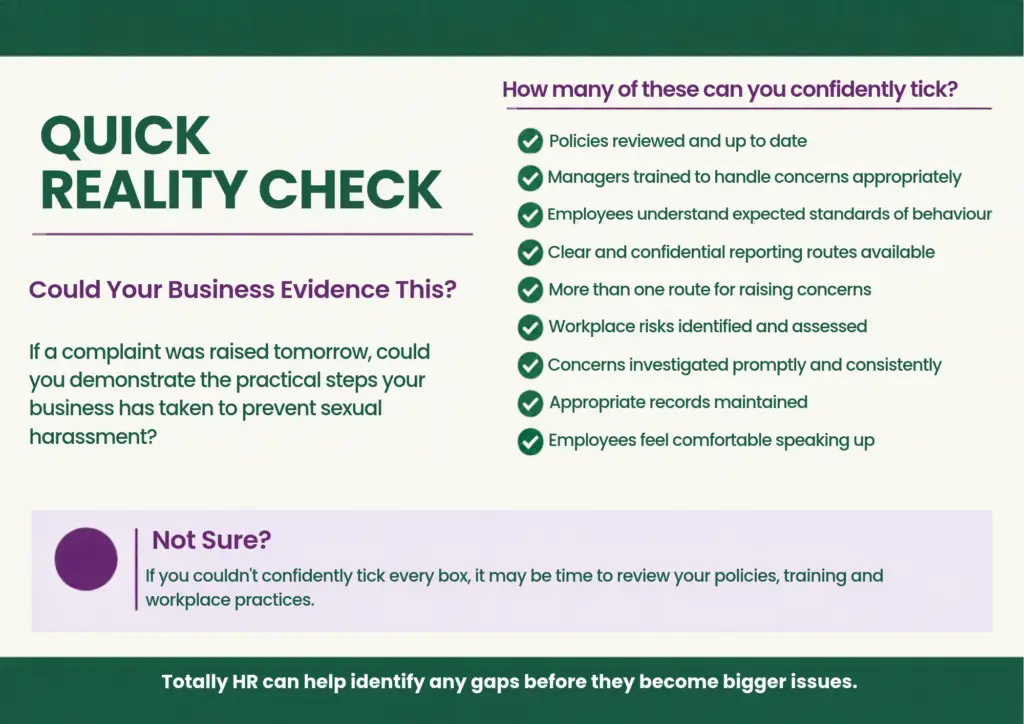
But if a complaint was made tomorrow, could you demonstrate the steps your business has actually taken to prevent it from happening in the first place?
That’s becoming an increasingly important question for employers as employment law continues to place greater emphasis on prevention, not just reaction. Recent reforms have strengthened expectations on employers to take proactive steps to protect employees and create safe working environments.
Having a Policy Isn't Enough
A common mistake is assuming that having a policy mean the issue is covered. Policies are important, but a document sitting in a handbook that nobody has looked at in years is unlikely to be enough if concerns arise.
The real question is whether people understand:
- What’s expected of them.
- What behaviour is unacceptable.
- How to raise concerns.
- What will happen when a concern is reported.
Just as importantly, would your managers know what to do if someone approached them with an issue or an allegation of workplace harassment?

What Are "Reasonable Steps"?
There isn’t a checklist that applies to every business. What are considered to be reasonable steps will depend on factors such as the size of your organisation, the nature of the work and the risks your employees face. The question employers should be asking is simple:
What have we done to reduce the risk of sexual harassment in our workplace?
If the answer is mainly “we’ve got a policy”, it may be time for a review.
Five Areas Every Employer Should Consider
1. Review Your Policies
Make sure relevant policies are up to date, easy to understand and reflect how concerns can be raised and dealt with. Policies should support your culture, not simply exist to tick a box.
2. Train Your Managers
Managers are often the first people employees speak to when something isn’t right.
Without training, there is a risk concerns are unintentionally dismissed, mishandled or not escalated appropriately. Providing managers with practical guidance can help ensure issues are dealt with consistently and professionally.
3. Raise Employee Awareness
Employees need to understand expected standards of behaviour, how to report concerns and be confident those concerns will be taken seriously. Training and regular communication help reinforce those messages.
4. Encourage People to Speak Up
The reality is that many concerns never get reported. Employees may worry about damaging relationships, being seen as a troublemaker or simply not being believed.
Ask yourself:
- Would employees feel comfortable raising a concern?
- Do they know who they can speak to?
- Is there more than one reporting route available?
- Do they trust concerns will be handled fairly?
5. Consider Higher-Risk Situations
Every workplace is different, but some situations can present greater risk, including:
- Work social events.
- Customer-facing roles.
- Business travel.
- Lone working.
- Situations where alcohol is involved.
Thinking about these risks in advance allows sensible safeguards to be put in place.

Don't Forget Third Parties
Harassment issues don’t always involve colleagues. Customers, clients, contractors, suppliers and visitors can also be responsible for inappropriate behaviour.
If an employee reported misconduct by a customer tomorrow, would your managers know how to respond? Having a clear approach before an issue arises is always easier than trying to develop one in the middle of a complaint.
A Quick Reality Check
Final Thoughts
Most employers genuinely want to provide a safe and respectful workplace. The challenge is making sure that good intentions are supported by practical action. Taking time to review your policies, train managers and create a culture where people feel able to speak up isn’t just about compliance. It’s about protecting your people, your reputation and your business.
If a complaint arose tomorrow, could you demonstrate the steps you’ve taken to prevent it?
If you’re not completely confident in the answer, now is the time to review your arrangements before an issue arises rather than after it happens.
At Totally HR, we help businesses review policies, train managers and ensure practical processes are in place to support a safe and respectful working environment. If you’d like an honest assessment of where your business currently stands, get in touch.